Open Hours: Mon–Fri 7:30–16:00Get a bulk quote →
Industries We Serve

AdBlue® for every industry

Certified, Australian-made AdBlue® and workshop products, supplied to the industries that keep the country moving.

Liquidia pp row

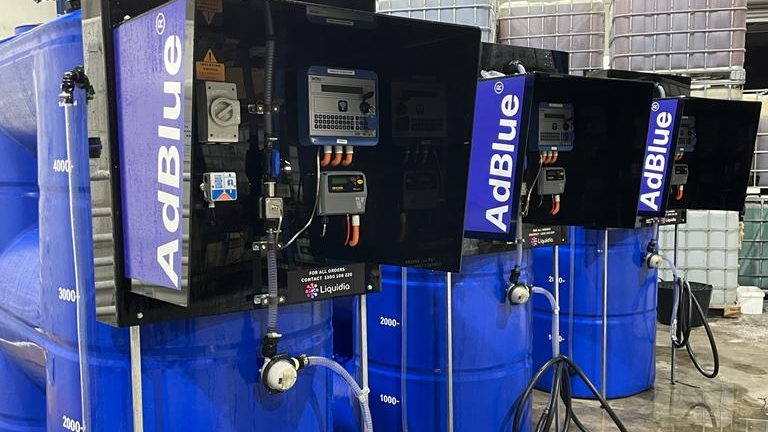
Transport & Logistics

Liquidia supplies certified bulk AdBlue® to transport fleets Australia-wide, with depot tanks, tanker refills and never-run-dry monitoring that keep trucks moving.
Request a price ›
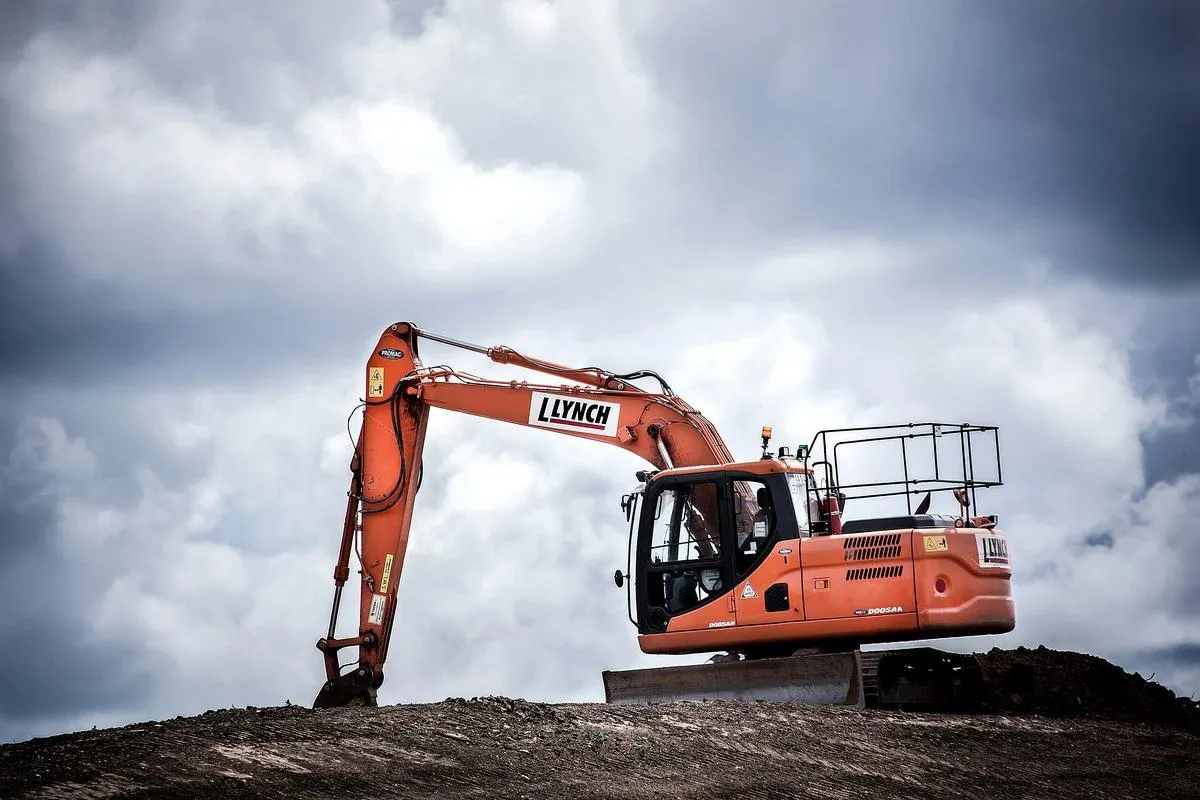
Excavator working on an earthmoving site

Mining & Earthmoving

Liquidia delivers VDA-certified AdBlue® and on-site bulk storage to mining and earthmoving operations, including remote sites, right across Australia.

Request a price ›
Earthworks and machinery on an Australian construction site

Construction

Liquidia supplies AdBlue® to construction sites in drums, IBCs and bulk, with site deliveries and portable storage that keep plant and machinery compliant.

Request a price ›
Tractor applying fertiliser across a crop field

Agriculture

Liquidia supplies farmers and growers with AdBlue® in drums, IBCs and bulk — flexible supply that suits seasonal demand and remote properties.
Request a price ›
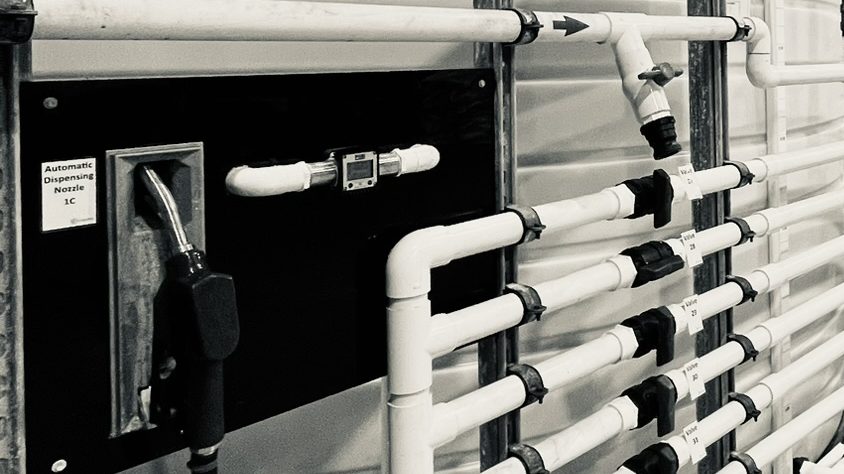
Automatic AdBlue dispensing nozzle and valve manifold

Automotive & Workshops

Liquidia supplies workshops, dealers and service centres with AdBlue® in bottles, drums and dispensing kits.
Request a price ›
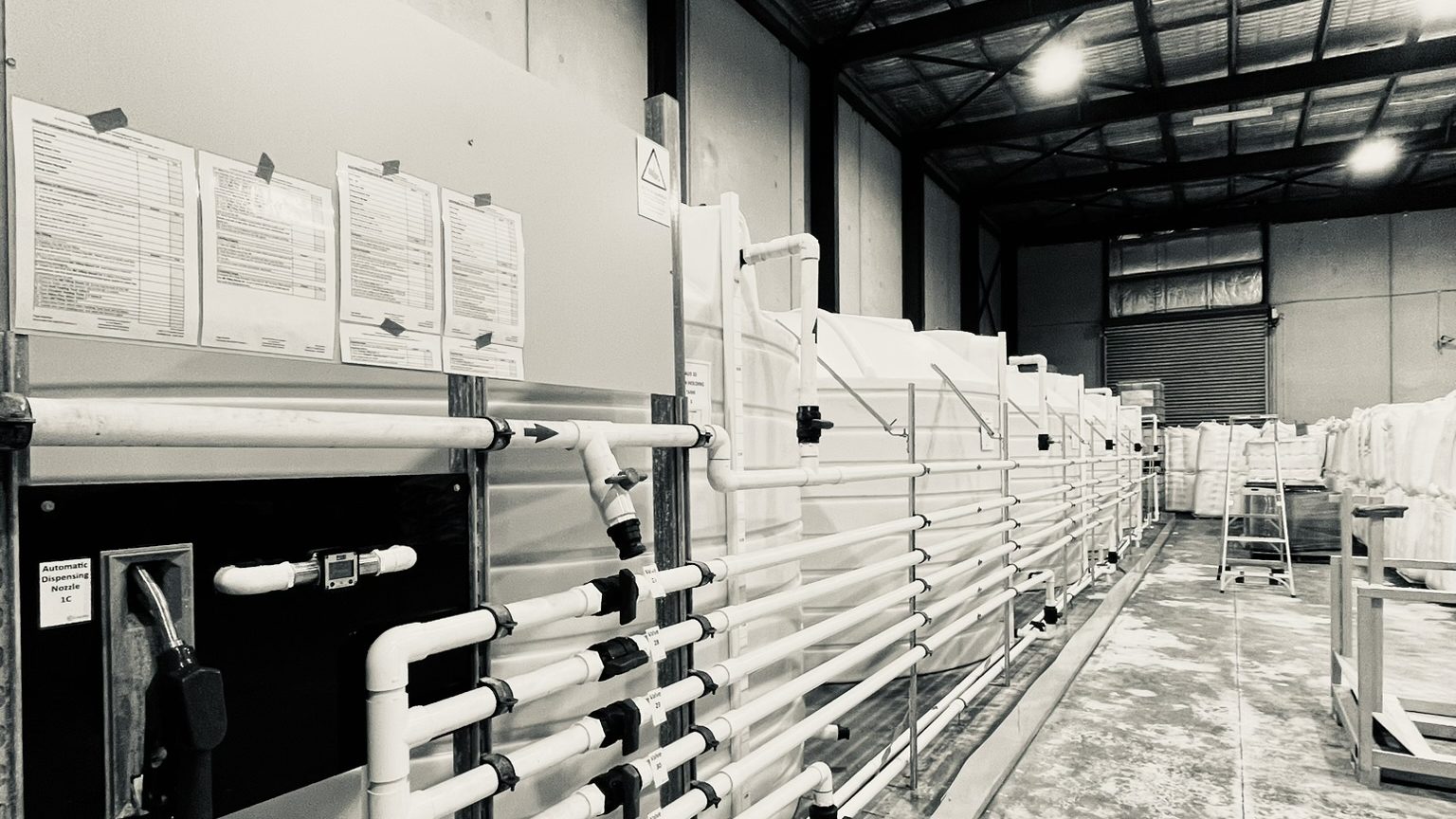
AdBlue dispensing and pipework in the Liquidia plant

Service Stations

Liquidia supplies VDA-certified AdBlue® to independent service stations across Australia, including sites trading under major national brands, in packs, IBCs and bulk.

Request a price ›

How much AdBlue® does your operation use?

AdBlue® use follows diesel use. For most trucks it runs at about 3–6% of diesel consumption, and some off-road engines use more. Start with your diesel figures and the rest is simple arithmetic.

Transport example

A B-double doing 2,000 km a week at about 50 L/100 km burns roughly 1,000 L of diesel a week. At 3–6%, that is about 30–60 L of AdBlue® a week, or around 1,500–3,000 L a year for one truck.

Plant example

An excavator or loader burning 300 L of diesel a day uses about 9–18 L of AdBlue® a day at 3–6%, and possibly more if the engine maker quotes a higher rate. A site with several machines soon justifies an IBC or a bulk tank.

Farm example

A tractor burning 200 L of diesel a day through seeding or harvest uses about 6–12 L of AdBlue® a day. Demand is concentrated into a few busy weeks, so timing the purchase matters more than on a truck fleet.

For your own numbers, use the AdBlue® usage calculator or read how to calculate fleet AdBlue® usage.

Which pack size suits which industry

IndustryUsual starting pointMain thing to watch
Transport and logisticsIBCs, then a bulk tank with scheduled refillsRunning out at the depot on a busy week
Mining and earthmovingIBCs or a bunded bulk tankHeat, dust and long gaps between deliveries
Construction210 L drums or IBCs that move between sitesOpen containers, sun exposure and contamination
Agriculture20 L packs, 210 L drums or IBCsStock ageing in a hot shed between seasons
Workshops and dealers10 L, 15 L and 20 L packsShared jugs and funnels

Prices for every pack size are on the price list. The step from 20 L packs to IBCs is usually the biggest saving per litre, and bulk suits sites using several IBCs a month. See bulk vs IBC vs drums for the trade-offs.

Storage problems by industry

AdBlue® keeps for about 18 months at or below 25 °C, but only about 6 months at or below 35 °C. Where and how you store it matters as much as what you buy.

Remote and hot sites

Mine sites and inland farms regularly see summer temperatures above 35 °C. Keep containers shaded and ventilated, buy quantities you will use within a few months, and test older stock before use. An IBC cover helps where there is no shed.

Dust, dirt and open lids

Construction and earthmoving sites are hard on containers. Keep lids closed, use a closed pump and nozzle rather than open jugs, and fit an inline filter on the dispensing line.

Seasonal buying on farms

Buying well ahead of seeding or harvest is sensible, but not so far ahead that stock sits through a hot summer. Store it out of direct sun, away from diesel, oils and fertiliser.

Busy depots and workshops

Shared funnels and jugs that also touch diesel or coolant are the most common cause of contamination. Keep dedicated, labelled AdBlue® equipment. Tank-level monitoring and scheduled refills stop the depot running dry.

TELL US YOUR OPERATIONCall with your diesel use and we will tell you the most cost-effective way to buyGive us your fleet or machine count, your rough weekly diesel use and your site. We will work out your AdBlue® volume, the pack size or tank that suits, and quote delivery to your suburb. Call 1300 106 220

Questions buyers ask

How do I estimate how much AdBlue my fleet will use?

Take your diesel consumption and multiply by about 3 to 6 percent for most trucks. Some off-road engines use more. For example, 1,000 L of diesel a week works out to roughly 30 to 60 L of AdBlue a week.

What is the best AdBlue pack size for a farm?

It depends on how many machines you run and how concentrated your season is. Many farms use 20 L packs or 210 L drums, and larger operations use IBCs. Avoid buying so far ahead that stock sits through a hot summer.

How should I store AdBlue on a hot mine or remote site?

Keep it shaded and ventilated, out of direct sun, and buy quantities you will use within a few months. Shelf life drops to about 6 months at 35 degrees, and stock stored hotter than that should be tested before use.

When does bulk AdBlue make sense instead of IBCs?

Bulk usually makes sense when a site is going through several IBCs a month. A bulk tank with scheduled refills also removes the handling of empty IBCs. Call us with your usage and we will compare the options.

Which industry are you in?

Tell us your operation and we'll tailor supply to suit.

VDA QMC licensed AdBlue® manufacturer · ISO 22241 · VDA AdBlue® licence No. 0005569 — Figure Eight Enterprises Pty Ltd